
Risks of Using an Online DIY Estate Planning Service
- Feb 24, 2026
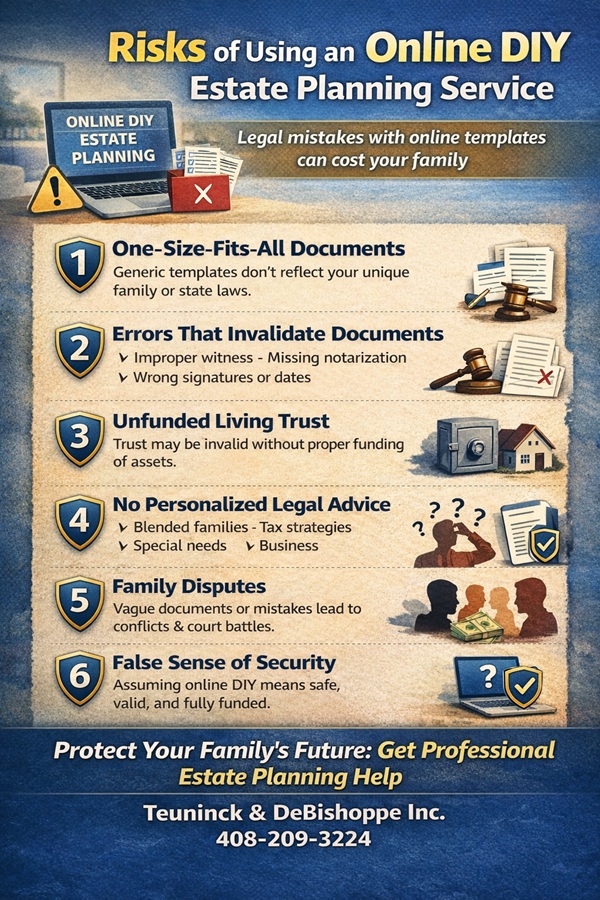 Online do-it-yourself (DIY) estate planning services have become popular because they appear quick, inexpensive, and convenient. While these services may work for very simple situations, there are important risks that individuals and families should carefully consider before relying on generic online forms for something as significant as an estate plan.
1. One-Size-Fits-All Documents
Most online estate planning platforms use standardized templates that may not account for your unique circumstances. Estate planning laws vary by state, and family and financial situations are rarely identical. A trust or will that is not properly tailored can lead to unintended consequences.
2. Errors That May Invalidate Documents
Estate planning documents must meet strict legal requirements to be valid. Common DIY mistakes include:
- Improper witnessing of wills
- Missing notarization
- Incorrect signatures or dates
- Incomplete provisions
Even small errors can cause a document to be challenged or rejected, potentially leading to probate or court involvement.
3. Lack of Education on Trust Funding
Creating a trust is only the first step; assets must be transferred into the trust for it to work. Many DIY users fail to properly fund their trust by transferring:
- Real estate
- Bank accounts
- Other titled property
An unfunded trust may provide little or no benefit, and probate may still be required.
4. No Personalized Legal Education resources
Online services cannot provide individualized legal education resources for your review:
- Family dynamics
- Tax concerns
- Special needs planning
- Blended family issues
- Business ownership
Without proper direction, people may choose the wrong documents or structure.
5. Increased Risk of Family Disputes
Ambiguous or poorly drafted documents can create confusion among heirs. This often results in:
- Disputes between family members
- Court challenges
- Delays in distribution
- Increased legal costs after death
A plan intended to make things easier can unintentionally create conflict.
6. False Sense of Security
Many people assume that completing an online questionnaire means they are “fully protected.” Unfortunately, estate planning is not just about having documents; it is about having documents that are legally valid, properly executed, and correctly funded.
7. Limited Accountability and Consumer Protection
Unlike registered professionals, online services may offer little oversight, and consumers may not know who prepared the documents. If errors occur, there may be limited recourse or support.
Conclusion
DIY estate planning services may seem appealing, but estate planning mistakes can be costly and difficult to fix later. For many individuals, working with a qualified professional, such as a licensed attorney or a registered and bonded Legal Document Assistant for document preparation, can provide greater accuracy, peace of mind, and long-term protection for loved ones.